
Several shops and marketplaces, one stock.
Every shop and marketplace sells from the same stock. An order on one reserves the item, and every other channel is told.
Sound familiar?
The last item sold twice
Two channels, one item, and an apology to the second customer.
Stock updated in every admin
The same figure typed into each shop by hand.
One product, many records
The same item listed under a different code on each channel.
What Pulsa does for you
Every shop you add should be more sales, not more work.
Each new shop or marketplace usually brings its own admin, its own stock to correct and its own way of printing labels. With Pulsa they all sell from one stock and feed one order list, so the warehouse works the same way however many channels you run.
- One stock, and every channel is toldAn order on any channel reserves the item the moment it arrives, and the new figure goes to every other shop and marketplace. The last unit is sold once.
- One product, one recordThe same item listed under a different code on each shop is linked or merged into one product with one stock figure. A product that belongs to one channel only can be made exclusive to it.
- One list, one walkOrders from every channel land in the same list, each with its channel badge. A picking list takes them together, and each channel's orders still move to that channel's own status.
- Disagreements found, not guessedStock differences lists every product where Pulsa and a channel show different stock, and turns the list into a stocktake. The goods are counted, and every channel shows the truth again.
Several shops, one warehouse routine.
Two webshops, a couple of marketplaces and one team on the floor. This is a day where nobody logs into five admin panels.
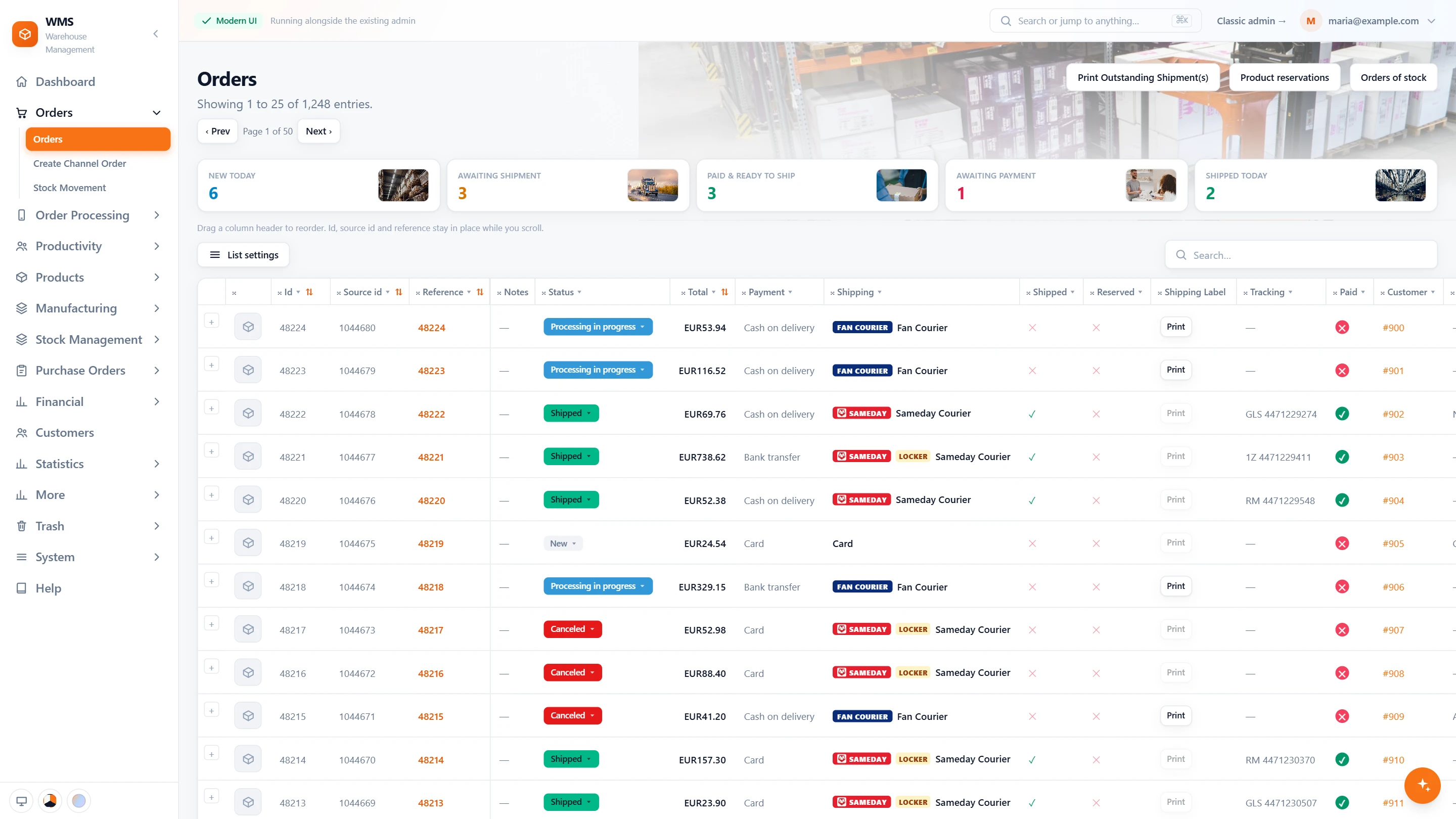
Every channel's orders in one list
Overnight orders from all your shops and marketplaces are already in Pulsa, each row with its channel badge, status and courier. Filter by sales channel when you need one shop, or work the whole day from the same counters.
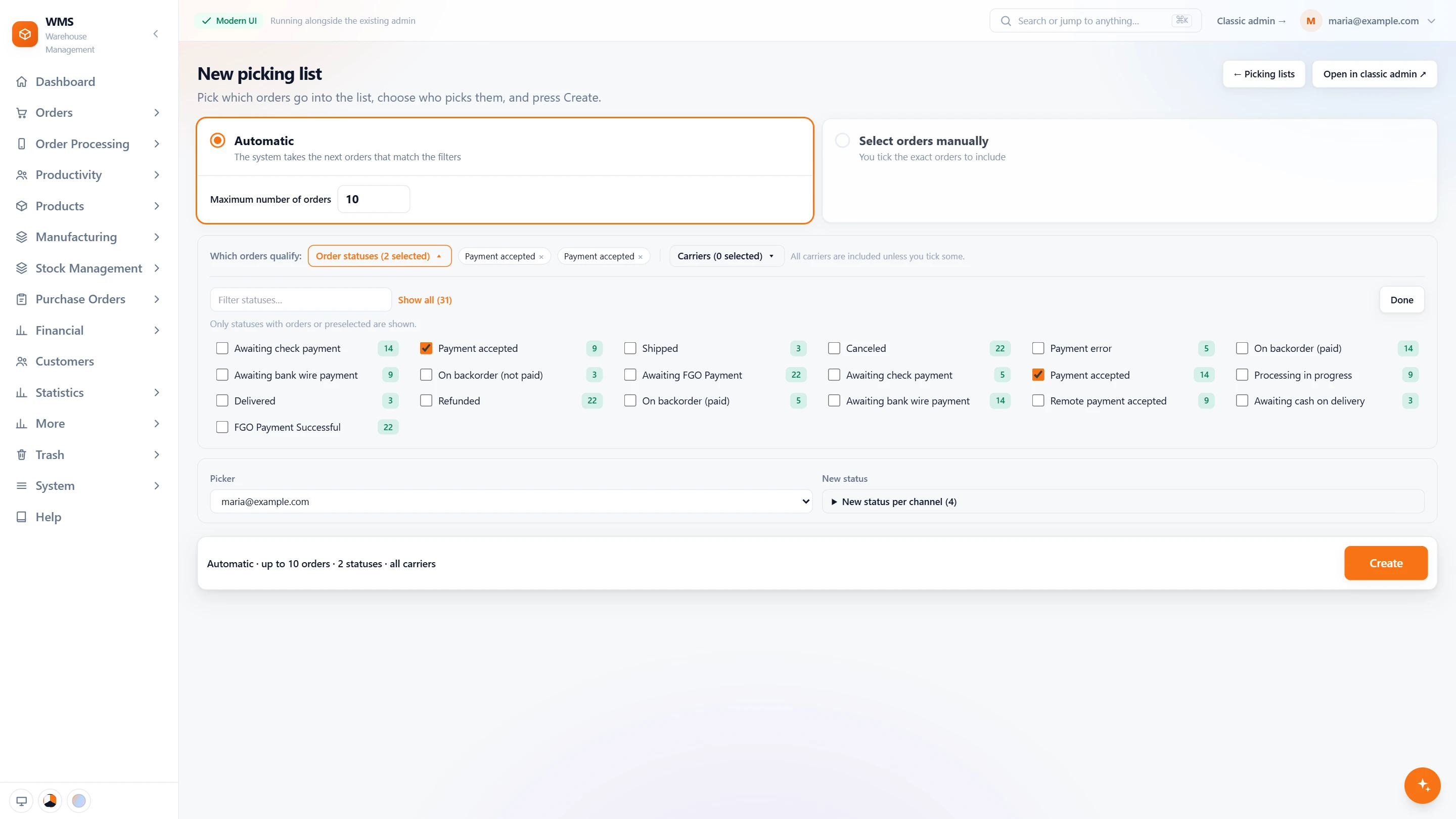
One picking list for all the shops
The morning list takes the ready orders, whichever shop they came from. Each channel has its own new status set for when the list is made, and the new status goes back to that shop.
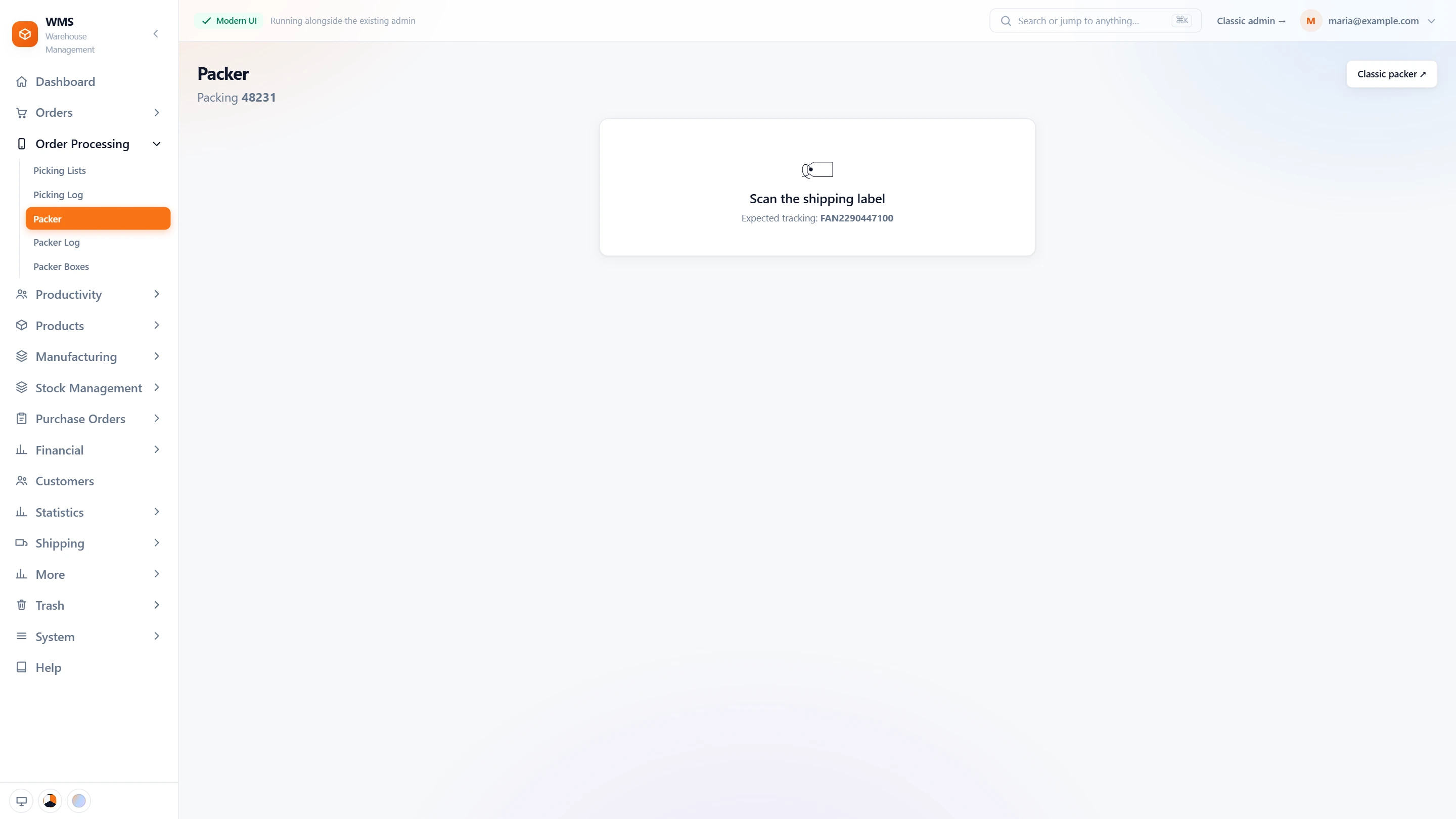
The right label for each channel
Marketplace orders and shop orders are packed at the same bench. eMAG and Trendyol labels print from the same packing screen as the couriers' labels, and when label scanning is on, a label that belongs to another order is refused.
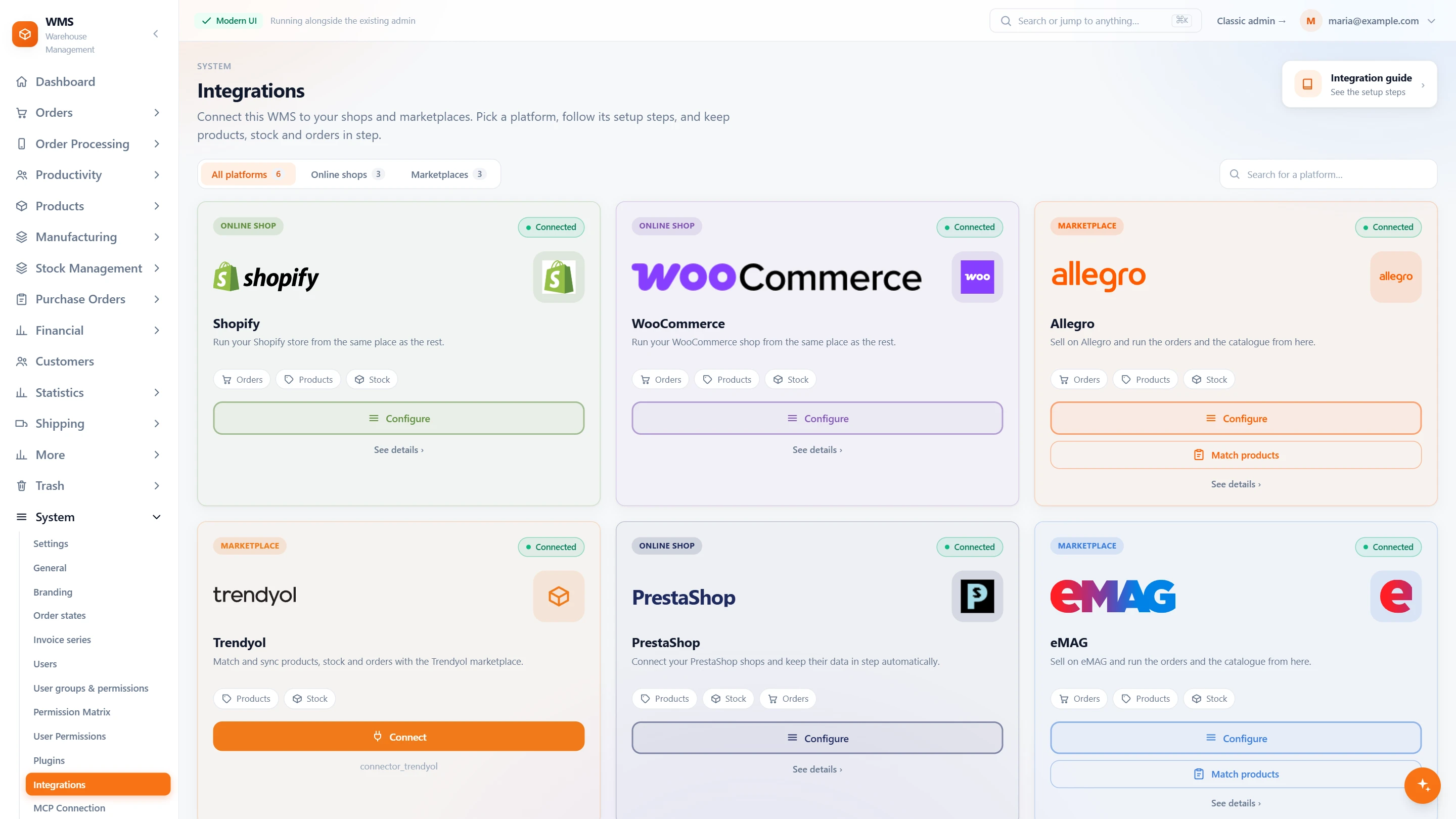
A new product goes live on a second shop
Settings › Integrations shows every shop and marketplace on a card, with what each one syncs: orders, products and stock. From the card, go straight to matching products, so the new listing shares the stock you already have.
A channel shows different stock? Count it.
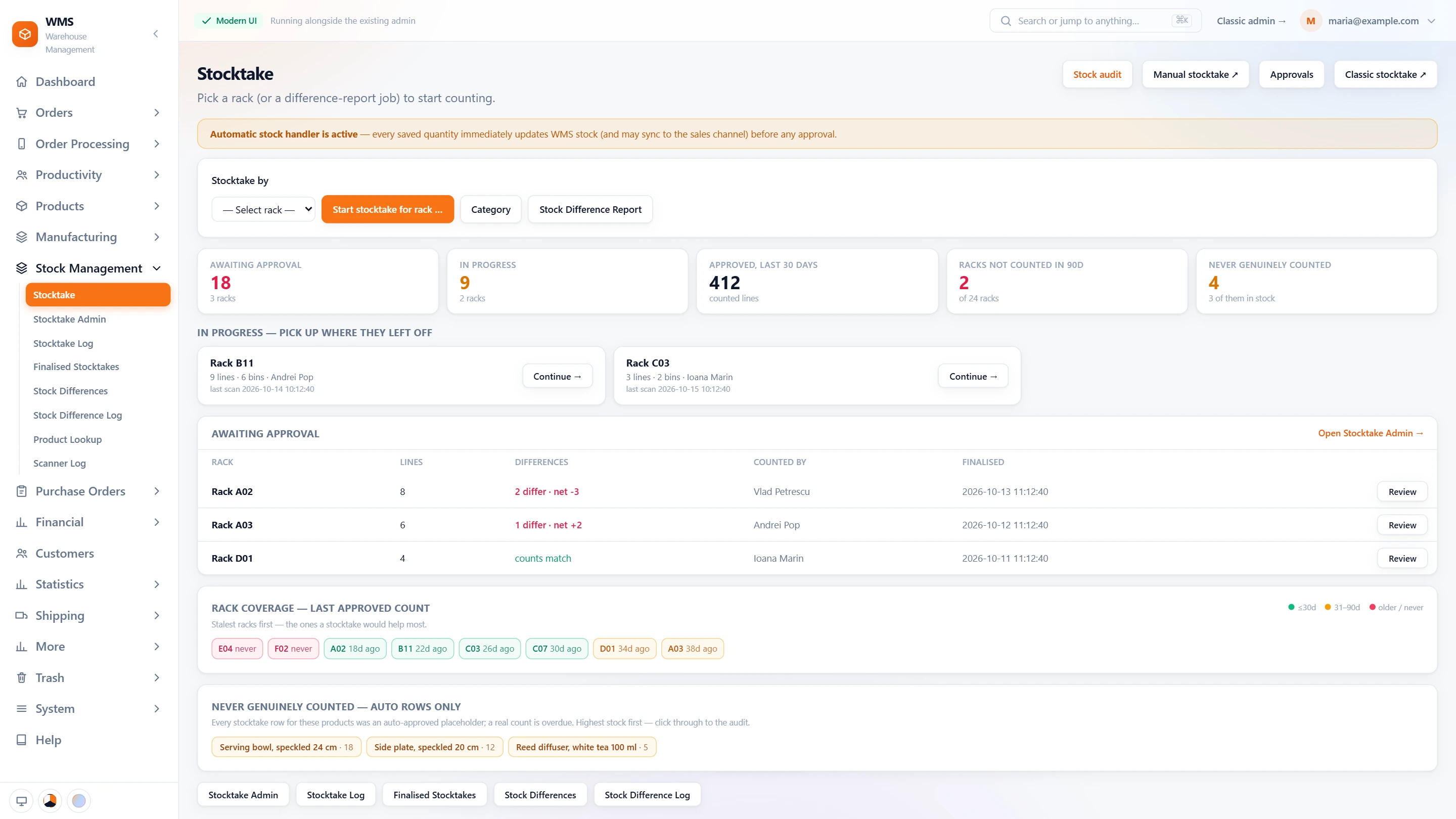
Stock differences lists the products where a channel disagrees with Pulsa and turns them into a stocktake. The office sees each count that disagrees, with who counted and where, and approves or declines it.
Which products earn their place
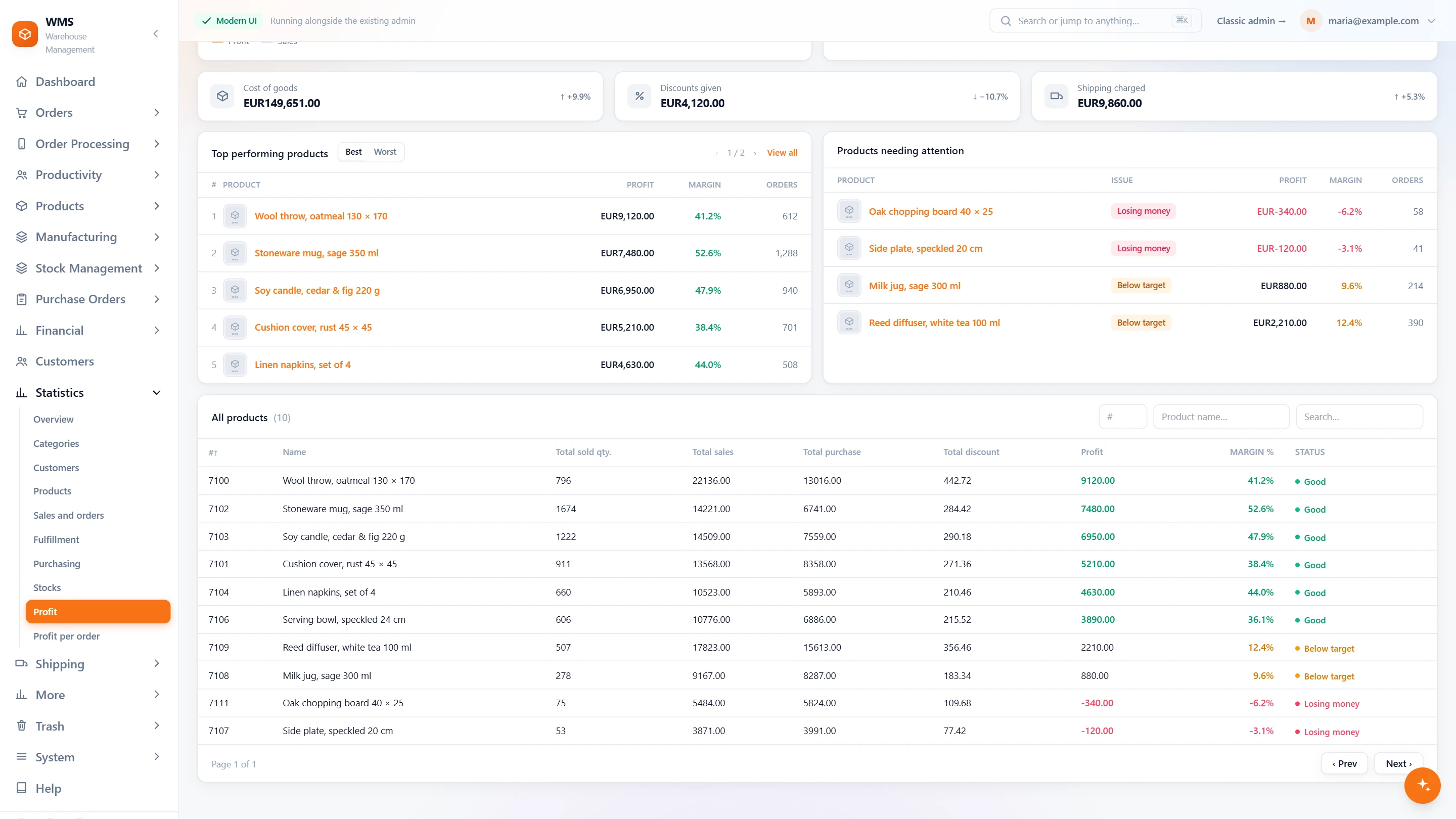
The profit page shows every product with its sales, purchase cost, discount, profit and margin, and marks the ones losing money or under your target. Sales per shop and marketplace are one screen away in the statistics.
Many shops, without many jobs.
Today: Each shop's orders are checked in its own admin.
With Pulsa: Every channel's orders are in one list, filtered by channel when you need it.
Today: The same stock figure is typed into every shop by hand.
With Pulsa: The new figure goes to every channel on its own.
Today: The last item sells twice, and the second customer gets an apology.
With Pulsa: The item is reserved the moment the first order arrives, on any channel.
Today: One product has a different code on every channel.
With Pulsa: Linked records share one product and one stock.
Today: Each marketplace has its own portal for labels.
With Pulsa: eMAG and Trendyol labels print from the same packing screen as the couriers'.
Today: Nobody knows which shop really earns its keep.
With Pulsa: Sales per shop and marketplace, and profit per product, from the same orders.
One system, whatever the number of shops.
Adding a channel changes what you sell, not how the team works.






Questions
Can a product be sold on one channel only?
Yes. A product can be made exclusive to a sales channel.
What if a channel shows different stock?
Stock differences lists every product where Pulsa and a channel disagree, and turns the list into a stocktake.
Do we need one warehouse system per shop?
No. One Pulsa holds all your shops and marketplaces.
Our shops use different order statuses. Is that a problem?
No. Each channel's statuses are mapped to what the warehouse does next, and each channel can move its orders to its own status when picking starts.
Can each shop have its own invoice numbering?
Yes. Invoice series have their own prefix and numbering and are used by the sales channels you choose; a channel with one series is numbered without a question.
Can we add another shop later?
Yes. Each shop you connect becomes one more sales channel selling from the same stock. Every connection starts switched off until it has been tested.
Our shops belong to different companies. Does that work?
Yes. Each company keeps its own stock and invoices in the same warehouse, and Pulsa suggests the invoicing company set for each sales channel.
Also for
See it with your own orders.
In the demo we connect your channels and show Pulsa working with your own orders.